
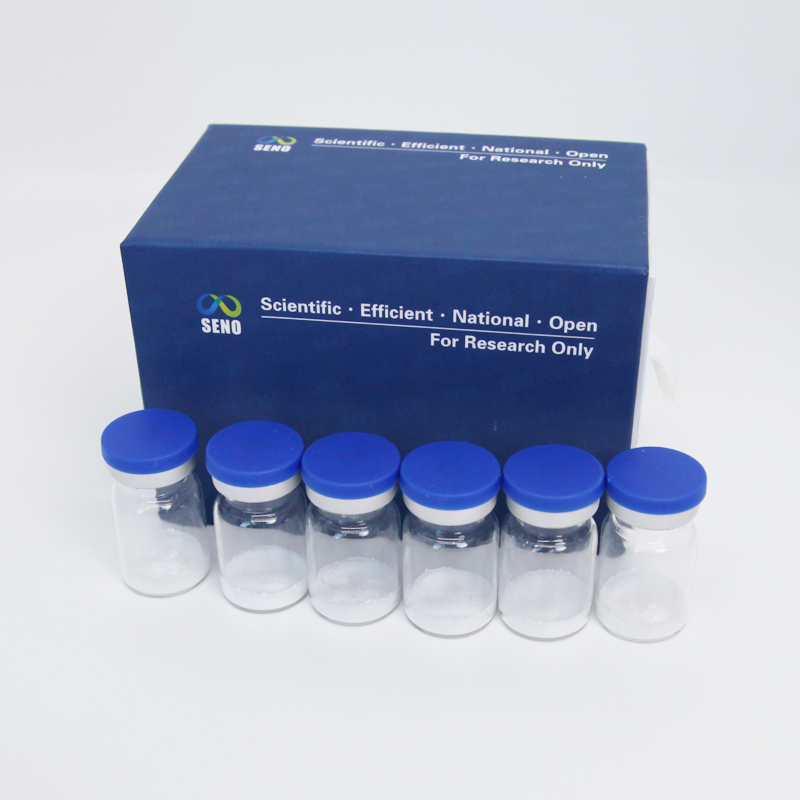
A receptor signaling and पेप्टाइड engineering perspective
Brief Overview
टेसामोरेलिन और इपामोरेलिन are both synthetic peptide systems studied for their interaction with growth hormone signaling pathways, but they operate through different receptor mechanisms. Tesamorelin is a GHRH analog that stimulates growth hormone–releasing hormone receptors, while Ipamorelin is a ghrelin receptor (GHSR) agonist that mimics hunger-signaling peptide activity. Although both influence growth hormone signaling cascades, their molecular targets, receptor pathways, and signaling behavior are fundamentally different.

नवीनतम प्राप्त करें उत्पादों और कीमतों की सूची
Why People Search “Tesamorelin and Ipamorelin”
Most people searching:
- “tesamorelin vs ipamorelin”
- “tesamorelin and ipamorelin together”
- “what is ipamorelin peptide”
- “how tesamorelin works”
are actually trying to understand:
how peptide signaling systems communicate with endocrine pathways.
Many online articles oversimplify this topic into:
- “one is stronger”
या: - “one releases more GH.”
But the real biochemical story is much more interesting.
The key difference involves:
- receptor biology
- signaling hierarchy
- hypothalamic communication
- peptide engineering
- pulsatile endocrine signaling
What Is Tesamorelin?
टेसामोरेलिन
Tesamorelin is:
- a synthetic peptide analog
designed to mimic:
Growth Hormone-Releasing Hormone (GHRH)
It primarily targets:
GHRH ReceptorGHRH\ Receptor
What GHRH Normally Does
In biological systems,
GHRH functions like:
- an upstream signaling messenger.
It communicates between:
- hypothalamic signaling regions
and: - pituitary endocrine systems.
सरल उपमा
Tesamorelin behaves somewhat like:
- pressing the “broadcast” button that tells the endocrine control center to prepare signaling output.
It works upstream in the communication chain.
What Is Ipamorelin?
इपामोरेलिन
Ipamorelin is a:
- synthetic peptide agonist
के साथ इंटरैक्ट करने के लिए डिज़ाइन किया गया:
घ्रेलिन रिसेप्टर्स
also known as:
GHSR (Growth Hormone Secretagogue Receptor)GHSR\ (Growth\ Hormone\ Secretagogue\ Receptor)
Why This Is Different
Unlike Tesamorelin,
Ipamorelin does not primarily mimic GHRH.
Instead,
it mimics:
- ghrelin-like signaling behavior.
What Ghrelin Normally Does
Ghrelin is often associated with:
- hunger signaling
- meal anticipation
- energy-state communication
But biologically,
ghrelin signaling also participates in:
- endocrine coordination pathways.
सरल उपमा
If Tesamorelin acts like:
- sending an official command memo,
Ipamorelin acts more like:
- activating the biological “wake-up signal” system.
The Biggest Difference Most Websites Miss
Most articles say:
“Both increase growth hormone signaling.”
That is technically true,
but scientifically incomplete.
The real distinction is: receptor origin.
टेसामोरेलिन
Acts primarily through:
- GHRH receptor pathways.
This resembles:
- natural hypothalamic endocrine signaling.
इपामोरेलिन
Acts primarily through:
- ghrelin receptor pathways.
This resembles:
- nutrient-state and energy-balance signaling.
Why This Changes Biological Behavior
These receptor systems belong to:
- different communication layers.
Even though both may influence similar downstream pathways,
they originate from:
- different signaling architectures.
Signaling Pathway Comparison
| विशेषता | टेसामोरेलिन | इपामोरेलिन |
|---|---|---|
| Main Target | GHRH receptor | Ghrelin receptor (GHSR) |
| Signaling Style | hypothalamic endocrine signaling | ghrelin-like signaling |
| Biological Analogy | official command signal | metabolic wake-up signal |
| Molecular Category | GHRH analog | growth hormone secretagogue |
Why Researchers Study These Peptides
Modern peptide research is increasingly focused on:
- signaling specificity
- रिसेप्टर चयनात्मकता
- pulsatile signaling patterns
- endocrine pathway modulation
Scientists are interested in:
- how different receptors create different signaling rhythms.
Why Pulsatile Signaling Matters
Biological signaling is rarely continuous.
Many endocrine systems operate through:
- pulses
- rhythmic secretion
- timing-dependent signaling
सरल उपमा
Hormonal signaling is less like:
- a water hose continuously running,
and more like:
- carefully timed electrical pulses.
Different peptides may influence:
- timing
- amplitude
- संकेत अवधि
differently.
Molecular Engineering Differences
टेसामोरेलिन
Tesamorelin was engineered for:
- receptor stability
- improved half-life
- enhanced signaling persistence
relative to natural GHRH.
इपामोरेलिन
Ipamorelin was engineered to:
- selectively stimulate ghrelin receptor pathways
while minimizing: - non-specific receptor activation.
Why Selectivity Became Important
Older peptide systems sometimes activated:
- multiple receptor pathways unintentionally.
Modern peptide engineering attempts to create:
- cleaner signaling profiles
- narrower receptor targeting
- more predictable pathway behavior
What Most Readers Don’t Realize
These peptides do not directly “contain growth hormone.”
This is one of the biggest misconceptions online.
They are:
- signaling peptides,
not: - replacement hormones.
Important Distinction
Tesamorelin and Ipamorelin
Primarily function as:
- receptor communication molecules.
They influence:
- signaling cascades,
not direct hormone replacement itself.
Manufacturing Perspective
Both peptides are typically synthesized using:
ठोस-चरण पेप्टाइड संश्लेषण (SPPS)
अमीनो अम्ल1→अमीनो अम्ल2→अमीनो अम्ल3अमीनो अम्ल1 → अमीनो अम्ल2 → अमीनो अम्ल3
Why Peptide Manufacturing Is Difficult
Synthetic peptide production requires:
- amino acid coupling precision
- oxidation control
- शुद्धिकरण
- sequence verification
- stability testing
Modern laboratories rely on:
- HPLC purification
- द्रव्यमान स्पेक्ट्रोमेट्री
- lyophilization systems
to maintain:
- purity
- reproducibility
- sequence integrity
Why Peptides Are Often Lyophilized
Peptides are chemically fragile.
Liquid forms may undergo:
- जल-अपघटन
- ऑक्सीकरण
- aggregation
Lyophilization improves:
- storage stability
- transport durability
- molecular preservation
Tesamorelin vs Ipamorelin: The Core Scientific Difference
The key difference is not:
- “which is stronger.”
यह है:
which receptor system they communicate with.
Tesamorelin:
- mimics hypothalamic GHRH signaling.
Ipamorelin:
- mimics ghrelin-related signaling pathways.
That difference shapes:
- signaling behavior
- receptor activation patterns
- endocrine coordination dynamics
अंतिम वैज्ञानिक दृष्टिकोण
Tesamorelin and Ipamorelin are both synthetic signaling peptides designed to interact with growth hormone–related pathways, but they belong to different receptor families. Tesamorelin primarily acts through GHRH receptor signaling, while Ipamorelin targets ghrelin receptors. Their differences lie not only in structure, but also in the biological communication systems they are engineered to influence.
सारांश
Tesamorelin and Ipamorelin are not interchangeable peptides. Tesamorelin functions mainly as a GHRH analog involved in hypothalamic endocrine signaling, while Ipamorelin acts as a ghrelin receptor agonist associated with metabolic and nutrient-state signaling pathways. Understanding their receptor biology is essential for understanding how modern peptide signaling systems are engineered.
अक्सर पूछे जाने वाले प्रश्न
Is Tesamorelin the same as Ipamorelin?
No. They target different receptor systems and mimic different biological signaling pathways.
What receptor does Tesamorelin target?
Tesamorelin primarily targets:
- GHRH receptors.
What receptor does Ipamorelin target?
Ipamorelin primarily targets:
- ghrelin receptors (GHSR).
Are these peptides hormones?
No. They are signaling peptides designed to influence endocrine communication pathways.
Why are these peptides studied in laboratories?
Researchers study them to better understand:
- receptor signaling
- endocrine communication
- peptide engineering
- pulsatile biological signaling systems
संदर्भ (एपीए शैली)
Bowers, C. Y. (1998). Growth hormone-releasing peptide (GHRP). Cellular and Molecular Life Sciences, 54(12), 1316–1329. https://doi.org/10.1007/s000180050259
Fleseriu, M., & Hoffman, A. R. (2013). Tesamorelin: a novel growth hormone-releasing factor analog. Clinical Investigation, 3(7), 635–647. https://doi.org/10.4155/cli.13.50
Smith, R. G., Van der Ploeg, L. H. T., Howard, A. D., et al. (1997). Peptidomimetic regulation of growth hormone secretion. एंडोक्राइन रिव्यूज़, 18(5), 621–645. https://doi.org/10.1210/edrv.18.5.0312