
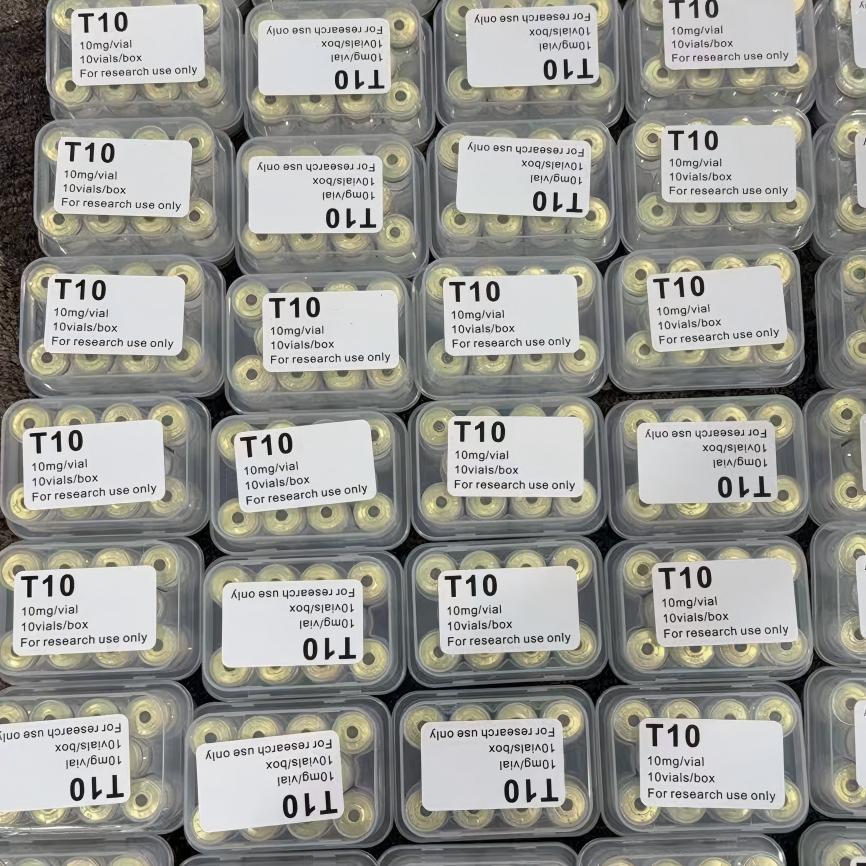
Retatrutid and Ozempic are fundamentally different metabolic Peptid systems. Ozempic (semaglutide) activates only the GLP-1 receptor, while retatrutide activates GLP-1, GIP, and glucagon receptors simultaneously. This triple-agonist design changes not only appetite signaling, but also energy expenditure and fuel utilization pathways, making retatrutide one of the most advanced peptide-engineering systems currently under investigation.
BLEIBEN SIE AUF DEM LAUFENDEN PRODUKT- UND PREISLISTE

Table of Contents
ToggleWhy So Many People Search “Retatrutide vs Ozempic”
From a biochemical perspective:
- how modern peptide engineering evolved
- why triple-agonist systems were created
- how metabolic signaling networks communicate
- why retatrutide behaves differently at the molecular level
What many readers really want to understand is:
Why does retatrutide seem fundamentally different from Ozempic instead of simply “stronger”?
That answer begins with receptor signaling architecture.
What Is Ozempic?
Ozempic
Ozempic contains:
Semaglutid
Semaglutide is a synthetic peptide engineered to mimic:
- glucagon-like peptide-1 (GLP-1)
GLP-1 is part of the incretin signaling system involved in:
- satiety communication
- nutrient signaling
- gastric emptying regulation
- insulin-related pathways
The Core Mechanism of Ozempic
Semaglutide primarily works by activating:
GLP-1 receptorGLP\text{-}1\ receptorGLP–1 receptoder
This signaling changes how biological systems interpret:
- hunger
- fullness
- nutrient intake
Einfache Analogie
Ozempic behaves somewhat like:
- lowering the brightness of hunger signals
The “eat more” messages become quieter.
Why Semaglutide Was Such a Big Breakthrough
Before GLP-1 analogs, many metabolic interventions focused mainly on:
- calorie restriction
- stimulant pathways
- indirect metabolic modulation
Semaglutide changed the industry because it directly targeted:
- appetite signaling biology itself.
That represented a major shift:
from:
- forcing metabolism
to: - communicating with metabolic signaling systems.
Was ist Retatrutid?
Retatrutid
Retatrutide is a newer investigational peptide system designed as a:
triple receptor agonist
It simultaneously targets:
| Receptor | Main Function |
|---|---|
| GLP-1 | satiety and appetite signaling |
| GIP | nutrient and insulin signaling |
| Glucagon | energy expenditure and fat oxidation |
Why This Is a Major Leap in Peptide Engineering
Most online discussions focus only on:
- appetite suppression
But retatrutide was engineered around a more advanced idea:
metabolism is not controlled by one switch.
It is controlled by:
- multiple coordinated signaling systems.
The Biggest Difference Most Articles Miss
The most important difference is not:
- “more appetite suppression.”
Es ist:
metabolic orchestration.
Ozempic mainly influences:
- intake signaling.
Retatrutide attempts to influence:
- intake
- nutrient partitioning
- energy utilization
- fuel mobilization
simultaneously.
Analogy: Single Pedal vs Full Vehicle Control
Ozempic
Wie:
- pressing one brake pedal to reduce food intake.
Retatrutid
Mehr davon:
- coordinating brakes,
- engine output,
- fuel usage,
- and transmission behavior at the same time.
That is why researchers describe it as:
- systems-level metabolic engineering.
Why the Glucagon Pathway Matters So Much
This is one of the least understood parts online.
Historically, glucagon was mainly viewed as:
- a blood glucose–raising hormone.
But newer metabolic research revealed something much more interesting:
Glucagon signaling also influences:
- lipid oxidation
- Energieaufwand
- mitochondrial fuel utilization
Why This Changes the Entire System
GLP-1 signaling mainly affects:
- how much fuel enters the system.
Glucagon signaling may influence:
- how aggressively stored fuel is burned.
Einfache Analogie
Imagine metabolism as a warehouse.
GLP-1
Reduces incoming deliveries.
Glucagon activation
Increases how aggressively existing inventory gets shipped out and used.
Retatrutide combines both systems.
What Makes Retatrutide Structurally Advanced
Retatrutide is not simply:
- “three peptides mixed together.”
Es ist:
- one engineered peptide sequence
konzipiert für die Interaktion mit: - multiple receptor systems simultaneously.
This requires extremely precise:
- receptor affinity balancing
- molecular folding behavior
- stability engineering
- half-life optimization
Why Peptide Engineering Became So Complex
Natural signaling molecules usually evolved for:
- specific biological tasks.
Modern synthetic peptides are different.
Researchers now engineer:
- Rezeptorselektivität
- signaling bias
- degradation resistance
- albumin binding
- multi-pathway activation
Retatrutide represents one of the clearest examples of this next-generation engineering strategy.
Why Retatrutide Results Look So Different
Clinical discussions around retatrutide became widespread because reported trial outcomes appeared larger than earlier GLP-1 systems.
But the key scientific point is:
retatrutide is not simply amplifying GLP-1.
It is redesigning:
- multiple metabolic signaling layers simultaneously.
That distinction matters enormously.
What Most Readers Don’t Realize About These Systems
One major misconception online:
“These peptides melt fat directly.”
That is not how they work.
These molecules do not behave like:
- chemical dissolvers.
They behave more like:
- signaling coordinators.
The biological system itself changes:
- appetite behavior
- fuel allocation
- metabolic efficiency
- energy usage patterns
through receptor communication networks.
Why Manufacturing These Peptides Is Difficult
Modern metabolic peptides are highly engineered molecules.
Manufacturing requires:
- solid-phase peptide synthesis (SPPS)
- purification systems
- folding verification
- impurity analysis
- lyophilization stabilization
Why Stability Engineering Matters
Without molecular stabilization:
- peptides degrade rapidly.
Modern systems therefore use:
- fatty acid conjugation
- albumin-binding modifications
- amino acid substitutions
to extend:
- half-life
- receptor exposure time
- molecular integrity
The Evolution of Metabolic Peptide Engineering
The progression currently looks like this:
| Generation | Signaling Design |
|---|---|
| Early GLP-1 systems | Single pathway |
| Semaglutid | Optimized GLP-1 |
| Tirzepatid | Dual agonist |
| Retatrutid | Triple agonist orchestration |
This progression reflects:
- increasingly sophisticated metabolic signaling control.
Why Ozempic Still Remains Important
Despite the excitement around retatrutide:
Ozempic remains extremely important because:
- extensively studied
- commercially established
- supported by large-scale manufacturing
- backed by broad clinical datasets
Retatrutide is still:
- investigational
- under continued evaluation.
Abschließende wissenschaftliche Betrachtung
The difference between retatrutide and Ozempic is not simply:
- “stronger vs weaker.”
The real difference is:
- signaling complexity.
Ozempic focuses mainly on:
- appetite communication.
Retatrutide attempts to coordinate:
- appetite,
- nutrient signaling,
- and energy expenditure
through a multi-receptor peptide engineering strategy.
At the End
Retatrutide represents a next-generation peptide-engineering system designed to coordinate multiple metabolic signaling pathways simultaneously, while Ozempic primarily focuses on GLP-1 appetite signaling alone. The addition of GIP and glucagon receptor activity is what makes retatrutide fundamentally different at the molecular and systems-biology level.
FAQ
Is retatrutide the same as Ozempic?
No. Ozempic contains semaglutide, which primarily activates GLP-1 receptors. Retatrutide activates GLP-1, GIP, and glucagon receptors simultaneously.
Why is retatrutide called a triple agonist?
Because one engineered peptide molecule is designed to activate three separate receptor systems.
Why is glucagon activation important?
Glucagon signaling may influence:
- Energieaufwand
- lipid oxidation
- mitochondrial fuel usage
which adds another metabolic layer beyond appetite regulation alone.
Is retatrutide stronger than semaglutide?
They are mechanistically different systems. Retatrutide is designed for broader metabolic signaling coordination rather than only stronger GLP-1 activation.
Why are these peptides difficult to manufacture?
Because advanced peptide systems require:
- precise sequence engineering
- Reinigung
- stability optimization
- receptor affinity balancing
- degradation resistance technologies
Literaturverzeichnis (APA-Stil)
Coskun, T., Urva, S., Roell, W. C., et al. (2022). LY3437943, a novel triple GIP, GLP-1, and glucagon receptor agonist for the treatment of obesity. Cell Metabolism, 34(9), 1234–1248. https://doi.org/10.1016/j.cmet.2022.07.008
Wilding, J. P. H., Batterham, R. L., Calanna, S., et al. (2021). Once-weekly semaglutide in adults with overweight or obesity. New England Journal of Medicine, 384(11), 989–1002. https://doi.org/10.1056/NEJMoa2032183
Jastreboff, A. M., Aronne, L. J., Ahmad, N. N., et al. (2022). Tirzepatide once weekly for the treatment of obesity. New England Journal of Medicine, 387(3), 205–216. https://doi.org/10.1056/NEJMoa2206038