
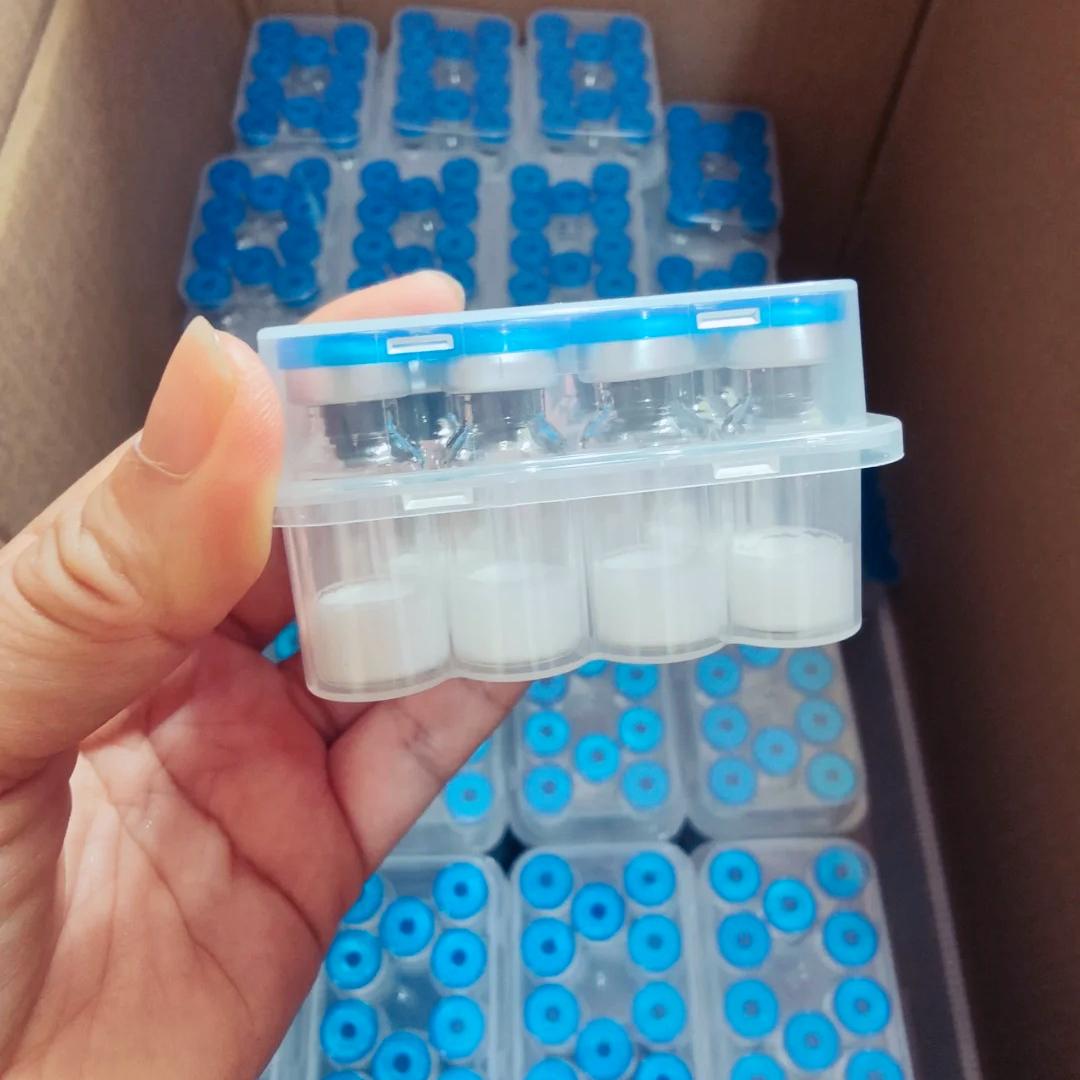
Tesamorelin Peptid is a synthetic analogue of Growth Hormone-Releasing Hormone (GHRH), specifically engineered to stimulate the pituitary gland’s endogenous secretion of growth hormone (GH). Chemically identified as a stabilized 44-amino-acid GHRH(1-44) analogue with a trans-3-hexenoic acid modification, tesamorelin activates GHRH receptors, elevates insulin-like growth factor-1 (IGF-1) production, and promotes lipolysis, particularly within visceral adipose tissue. Unlike exogenous growth hormone administration, tesamorelin leverages the body’s physiological GH regulatory pathway, making it a unique endocrine-modulating peptide widely studied in metabolic medicine, body composition management, and growth hormone axis research.
Table of Contents
ToggleDeep Dive: From Hormonal Signaling to Metabolic Fat Reduction
Tesamorelin occupies a unique position within peptide therapeutics because it does not function as growth hormone itself. Instead, it acts one step upstream in the endocrine hierarchy by targeting Growth Hormone-Releasing Hormone Receptors (GHRH-R) located on pituitary somatotroph cells. Once tesamorelin binds to these receptors, intracellular cyclic adenosine monophosphate (cAMP) concentrations increase, activating protein kinase A (PKA)-dependent signaling pathways that stimulate pulsatile growth hormone secretion. The resulting GH surge triggers hepatic synthesis of Insulin-Like Growth Factor-1 (IGF-1), which serves as the primary downstream mediator of tissue growth, metabolic regulation, and fat mobilization.
A simplified signaling cascade appears as follows:
Tesamorelin
      │
      ▼
GHRH Receptor Activation
      │
      ▼
Pituitary Growth Hormone Release
      │
      ▼
Liver IGF-1 Production
      │
      ▼
Enhanced Lipolysis & Metabolic Activity
An effective way to understand this mechanism is to compare the endocrine system to a national railway network. Growth hormone itself functions like a freight train directly transporting cargo. Tesamorelin, however, operates as the central dispatch station sending instructions that increase train frequency only when the existing rail infrastructure allows it. This distinction explains why tesamorelin generally preserves physiological feedback mechanisms, whereas direct GH administration bypasses part of the body’s natural regulatory architecture.
The most clinically significant outcome of this pathway is visceral adipose tissue reduction. Visceral fat differs substantially from subcutaneous fat because it accumulates around internal organs and exhibits high metabolic activity, contributing to insulin resistance, chronic inflammation, and cardiometabolic dysfunction. Elevated GH and IGF-1 signaling increase hormone-sensitive lipase activity while simultaneously suppressing lipid accumulation pathways, creating a metabolic environment favoring fat oxidation over storage.
Visceral Fat
      │
      ▼
GH-Induced Lipolysis
      │
      ▼
Free Fatty Acid Mobilization
      │
      ▼
Energy Utilization
This selective impact on deep abdominal adiposity explains why tesamorelin attracted significant clinical interest in metabolic disorders where visceral fat accumulation presents a major therapeutic challenge.
Molecular Structure and Pharmacological Engineering
The original endogenous GHRH molecule is susceptible to rapid enzymatic degradation within circulation. Tesamorelin was therefore engineered with a trans-3-hexenoic acid modification at the N-terminal region, improving molecular stability and prolonging biological activity without fundamentally altering receptor specificity.
Key molecular characteristics include:
| Parameter | Tesamorelin |
|---|---|
| Molecule Type | Synthetic GHRH Analogue |
| Amino Acid Length | 44 Residues |
| Primary Target | GHRH Receptor (GHRH-R) |
| Downstream Hormones | GH, IGF-1 |
| Major Metabolic Effect | Visceral Fat Reduction |
| Administration Route | Subcutaneous Injection |
| Regulatory Mechanism | Endogenous GH Stimulation |
The engineering philosophy behind tesamorelin resembles upgrading a telecommunications signal repeater rather than replacing the entire communication network. Scientists improved signal durability while preserving receptor recognition, thereby maintaining physiological hormone control loops.
Industry Comparison Matrix: Tesamorelin vs Growth Hormone vs Ipamorelin
One reason tesamorelin is frequently misunderstood is that many people group all GH-related peptides into the same category. Mechanistically, they are fundamentally different.
| Merkmal | Tesamorelin | Recombinant Human GH (rhGH) | Ipamorelin |
|---|---|---|---|
| Molekulare Klasse | GHRH Analogue | Growth Hormone | Ghrelin Receptor Agonist |
| Primary Target | GHRH Receptor | GH Receptor | GHSR-1a Receptor |
| Physiological GH Pulse Preservation | Yes | No | Partial |
| IGF-1 Elevation | Significant | Significant | Moderate |
| Visceral Fat Research | Extensive | Moderate | Limited |
| Endocrine Feedback Retention | High | Lower | Moderate |
| Molekulargewicht | ~5 kDa | ~22 kDa | ~0.7 kDa |
| Mechanism Complexity | Pituitary Activation | Direct Hormone Replacement | GH Secretagogue |
The practical distinction is substantial. Recombinant growth hormone acts as a direct hormone replacement strategy, while tesamorelin stimulates endogenous production. Ipamorelin activates the ghrelin receptor pathway, functioning more like a hormonal trigger signal than a pituitary regulatory molecule. Consequently, researchers often view tesamorelin as a more targeted manipulation of the GHRH-GH-IGF axis.
Manufacturing Process and Why Tesamorelin Is Difficult to Produce
From a peptide manufacturing perspective, tesamorelin belongs to the category of relatively long-chain synthetic peptides, making production considerably more challenging than short cosmetic peptides such as acetyl hexapeptides or pentapeptides.
Commercial manufacturing typically begins with Fmoc Solid-Phase Peptide Synthesis (SPPS), where amino acids are sequentially assembled on a polymeric resin support. Each synthesis cycle involves deprotection, amino acid coupling, washing, and verification steps. Because tesamorelin contains 44 amino acid residues, cumulative coupling inefficiencies can significantly affect final yield.
A simplified production workflow appears below:
Fmoc-SPPS Synthesis
         │
         ▼
Chain Elongation
         │
         ▼
Resin Cleavage
         │
         ▼
Crude Peptide Collection
         │
         ▼
RP-HPLC Purification
         │
         ▼
Mass Spectrometry Verification
         │
         ▼
Lyophilization
         │
         ▼
Finished Product
Industrial manufacturers typically rely on several advanced quality-control technologies:
- Fmoc solid-phase peptide synthesis (SPPS)
- Reverse-phase HPLC (RP-HPLC)
- MALDI-TOF mass spectrometry
- LC-MS purity confirmation
- Lyophilization freeze-drying
- Residual solvent analysis
- Endotoxin testing
- Peptide aggregation monitoring
The most overlooked industry challenge is not synthesis itself but maintaining conformational integrity and purity throughout downstream processing. Many simplified explanations focus on achieving ≥98% HPLC purity, yet experienced peptide manufacturers recognize that peptide stability, oxidation control, aggregation behavior, cold-chain logistics, and batch-to-batch reproducibility often determine real-world product performance more than headline purity figures alone.
FAQ: The Questions Researchers and Buyers Actually Ask
Is tesamorelin the same as growth hormone?
No. Tesamorelin stimulates the body’s own production of growth hormone through GHRH receptor activation, whereas growth hormone products deliver the hormone directly.
Does tesamorelin increase IGF-1 levels?
Yes. Elevated GH secretion stimulates hepatic IGF-1 production, making IGF-1 one of the primary biomarkers monitored during research and clinical evaluation.
Why is tesamorelin associated with visceral fat reduction?
Because GH signaling enhances lipolysis and preferentially affects metabolically active visceral adipose tissue, which is more responsive than many subcutaneous fat depots.
Is tesamorelin difficult to manufacture?
Yes. Its 44-amino-acid structure requires complex solid-phase synthesis, high-resolution chromatographic purification, rigorous mass-spectrometric verification, and strict stability control throughout production and storage.