
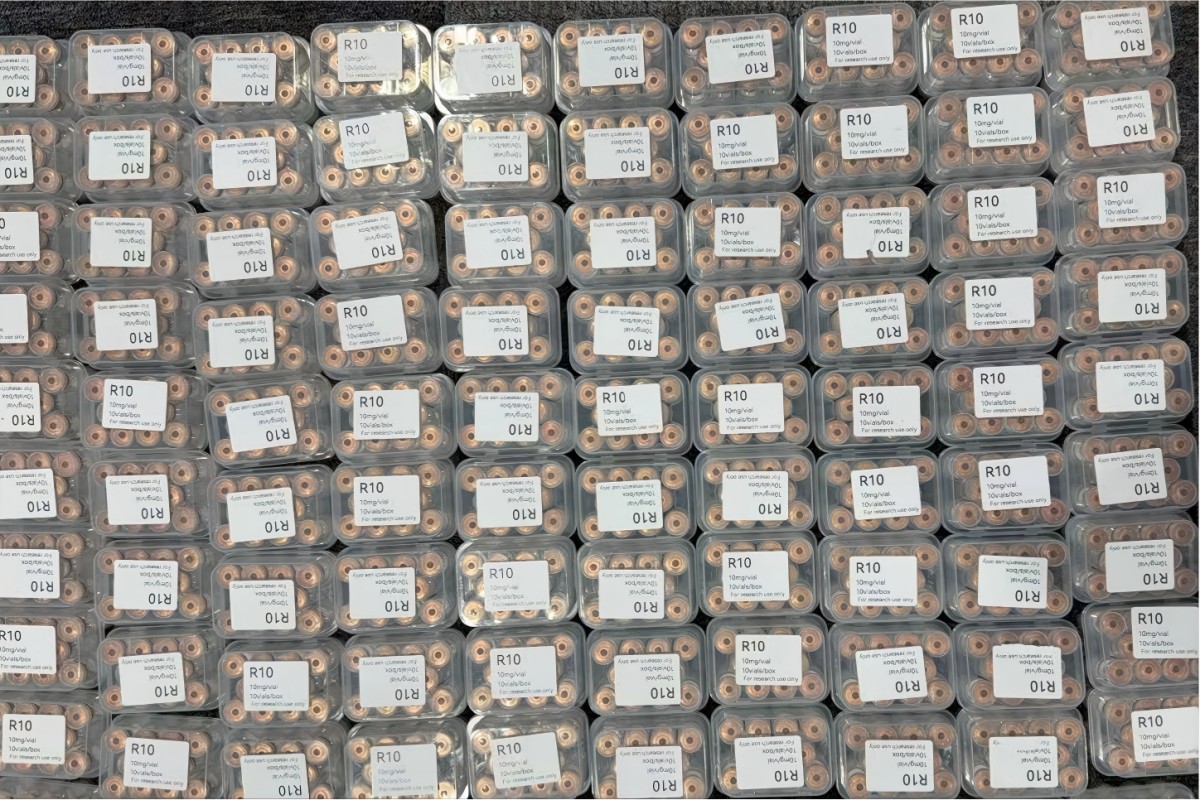
If you’re dealing with lyophilized (freeze-dried) peptides, it helps to think of the powder as a molecule put on “pause.” Lyophilization removes most of the water that drives chemical reactions, making the peptide significantly more stable than in liquid form. However, this does not make it permanent — proper storage still matters.
Typical Shelf Life (2–8 °C)
When stored in a refrigerator (2–8 °C), lyophilized peptides typically remain usable for 6 months to 2 years.
- Simple peptide sequences (without reactive amino acids) can remain stable closer to 1–2 years.
- More complex peptides, especially those containing reactive residues such as cysteine, methionine, tryptophan, or histidine, may begin to degrade within a few months.
Why Refrigeration Helps
Even in dry form, peptides are still subject to slow degradation processes, including:
- Oxidation
- Residual moisture effects
- Thermal molecular motion
Lower temperatures slow down these chemical reactions and molecular movement, significantly extending stability.
Key Factors That Affect Stability
The actual shelf life depends on several important factors:
- Primary sequence – some amino acids are more prone to oxidation
- Residual moisture – leftover water from lyophilization can accelerate degradation
- Sealing quality – airtight vials preserve stability better
- Environmental exposure – oxygen, light, and temperature fluctuations reduce shelf life
A tightly sealed vial stored with a desiccant in its original packaging will last significantly longer than one exposed to air or stored improperly.
Practical Storage Tips
- Keep vials tightly closed at all times
- Avoid frequent opening (reduces moisture and oxygen exposure)
- Store in original packaging with desiccant
- Protect from light if the peptide is light-sensitive
- Minimize temperature fluctuations (avoid condensation inside vials)
For long-term storage, placing peptides in a freezer at −20 °C or below can extend their stability to several years.
Signs of Degradation
Degraded lyophilized peptides often show visible changes, including:
- Discoloration
- Wet or sticky appearance
- Clumping instead of dry, fluffy powder
For critical applications, analytical testing such as HPLC ou mass spectrometry is required to confirm purity.
Storage Comparison Overview
- Room temperature: Suitable for short-term storage (weeks to a few months)
- Refrigeration (2–8 °C): Extends stability to months up to ~2 years
- Freezing (−20 °C or lower): Provides the longest shelf life (often years)
Important Note
Always follow the manufacturer’s recommended storage conditions and expiry dates. These are based on controlled stability studies and are more reliable than general guidelines.
Conclusion
Lyophilized peptides are significantly more stable than liquid solutions, but they are not completely inert. By carefully controlling temperature, moisture, and oxygen exposure, you can maximize their shelf life and maintain their integrity over time.
FAQs
Q1: Do lyophilized peptides need to be refrigerated?
Not always immediately, but refrigeration significantly extends shelf life by slowing degradation.
Q2: Can peptides go bad in the fridge?
Yes. Even in dry form, slow degradation (e.g., Oxidation) still occurs over time.
Q3: How can I tell if a lyophilized peptide has degraded?
Signs may include:
- Discoloration
- Clumping or moisture presence
- Reduced experimental performance
Q4: Is freezer storage better than fridge storage?
Yes. Freezing slows molecular motion further, offering longer stability.
Q5: Does opening the vial affect shelf life?
Yes. Each exposure introduces moisture and oxygen, reducing stability.
Q6: Can I store peptides at room temperature?
Short-term storage may be possible, but long-term stability is significantly reduced.