
Vue d'ensemble
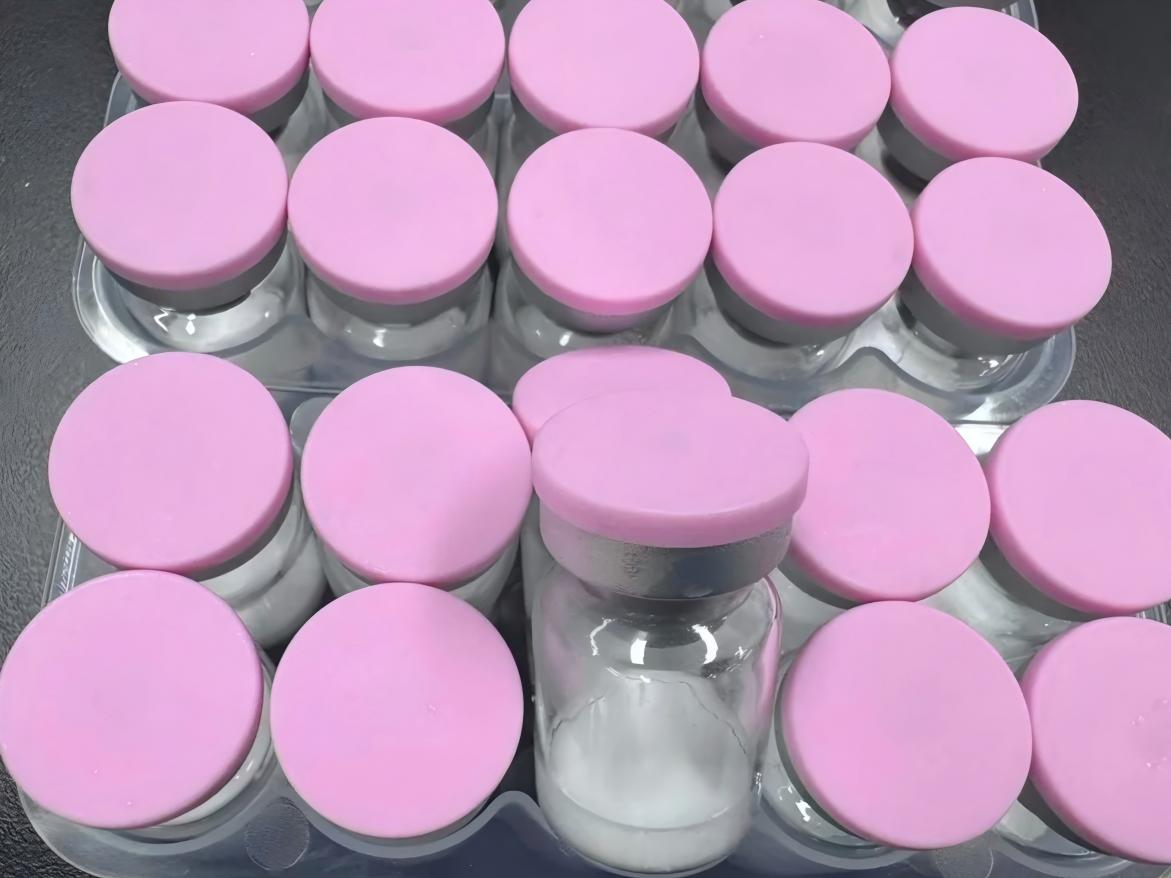
SNAP-8 peptide, also known as Acetyl Octapeptide-3, is a synthetic eight-amino-acid peptide derived from structural research on SNAP-25, a key protein in the SNARE complex responsible for vesicle docking and neurotransmitter release. In molecular biology research, SNAP-8 is studied as a competitive inhibitory peptide fragment that mimics part of the SNARE interaction interface, helping researchers understand cellular communication mechanisms and protein-protein binding dynamics.
The Origin: From SNAP-25 to Synthetic Octapeptides
The development of SNAP-8 does not begin as a cosmetic concept, but as a protein engineering simplification strategy.
In biological systems, the protein SNAP-25 is part of a much larger machinery called the SNARE complex, which controls vesicle fusion and signal release at the cellular membrane.
At full scale, this system involves:
- multiple proteins (SNAP-25, syntaxin, synaptobrevin)
- highly coordinated conformational changes
- calcium-dependent activation
- membrane fusion mechanics
From a research perspective, SNAP-25 is too large and structurally complex for direct mechanistic isolation.
To solve this, scientists extracted a functional binding segment of SNAP-25 and reduced it into a minimal peptide motif.
This reduction process follows a key principle in molecular biology:
Large functional proteins can often be mapped to smaller active interaction domains.
SNAP-8 is the result of this reduction strategy:
- a simplified octapeptide representation
- designed to retain partial interaction characteristics
- used as a molecular model system, not a full biological substitute
Cellular Communication and the SNARE Complex Mechanism
To understand SNAP-8, one must first understand the SNARE system as a biological docking engine.
Inside a cell, neurotransmitters and signaling molecules are packaged into vesicles. These vesicles cannot release their contents unless they physically fuse with the membrane.
This fusion process is controlled by the SNARE complex, which behaves like a precision docking machine.
Core Mechanism
- SNAP-25 acts as a structural scaffold
- Syntaxin provides membrane anchoring
- Synaptobrevin drives vesicle alignment
When properly assembled, these proteins form a tight “zipper-like” structure that forces membranes together.
Competitive Interaction Model (SNAP-8 Mechanism Concept)
SNAP-8 is studied as a competitive binding fragment.
It does not replicate the full SNARE machinery. Instead, it resembles a partial interaction motif that can engage with binding interfaces involved in the SNAP-25 region.
This leads to a simplified research model:
- native SNARE proteins = full docking system
- SNAP-8 = partial structural mimic
- result = modulation of interaction efficiency in experimental models
Port System Analogy (Refined Model)
Think of a cargo port:
- Ships = vesicles carrying signals
- Docking cranes = SNARE complex
- Docking schedule = regulated membrane fusion timing
In this system:
- SNAP-25 is one of the key mechanical arms controlling docking alignment
- SNAP-8 behaves like a partial replica of a crane component
It does not operate the full system, but it can interfere with how smoothly docking alignment is tested in experimental simulations.
SNAP-8 vs. Argireline (Acetyl Hexapeptide-8): What’s the Difference?
SNAP-8 is often compared with Argireline (Acetyl Hexapeptide-8) because both originate from SNAP-25–derived research.
However, they differ in structural length, molecular design, and interaction modeling depth.
| Fonctionnalité | Argireline (Acetyl Hexapeptide-8) | SNAP-8 (Acetyl Octapeptide-3) |
|---|---|---|
| Amino Acid Length | 6 amino acids | 8 amino acids |
| Molecular Mass | Lower | Higher |
| Structural Design | First-generation SNAP-25 mimic | Extended interaction fragment |
| SNARE Interaction Model | Basic competitive mimicry | Expanded binding region simulation |
| Research Focus | Minimal inhibition model | Enhanced interaction domain modeling |
| Theoretical Stability | Moderate | Slightly improved due to extension |
Key Scientific Interpretation
The additional two amino acids in SNAP-8 are not simply “size increase”.
They are designed to:
- extend binding surface compatibility
- increase structural mimicry accuracy
- improve peptide-protein interface modeling resolution
In molecular research terms:
SNAP-8 represents a second-step refinement of SNARE-interface simplification.
Solid-Phase Peptide Synthesis (SPPS) of SNAP-8
SNAP-8 is produced using Synthèse de peptides en phase solide (SPPS), a stepwise chemical assembly method widely used in peptide engineering.
The process follows a controlled sequence:
Amino acids are anchored onto an insoluble resin matrix, where sequential coupling reactions build the octapeptide chain one residue at a time. After each coupling step, protective groups are removed to allow the next amino acid to attach. Once the full sequence is assembled, the peptide is cleaved from the resin and undergoes multi-stage purification.
Purification typically includes:
- preparative HPLC separation
- desalting and solvent exchange
- structural confirmation via mass spectrometry
Industrial Quality Standards
For research-grade SNAP-8, typical specifications include:
- Pureté : ≥98% (vérifié par HPLC)
- Sequence confirmation via LC-MS
- Residual solvent control under analytical thresholds
- Batch-to-batch reproducibility validation
These parameters are essential because:
even minor sequence impurities can alter peptide-protein interaction behavior in SNARE-related models.
Manufacturing Analogy
The synthesis process can be compared to assembling a precision mechanical chain:
- each amino acid = a mechanical link
- coupling reaction = locking mechanism
- resin support = assembly platform
- cleavage = final release of finished chain
Any incorrect linkage changes the mechanical function of the entire system.
Current Research Applications and Future Perspectives
From a molecular research perspective, SNAP-8 is not just a cosmetic-associated peptide. It is primarily used as a model system for protein interaction studies.
1. Cosmetic Science (Dynamic Expression Modeling)
SNAP-8 is widely investigated in:
- expression line formation models
- repetitive facial muscle contraction simulations
- extracellular matrix signaling studies
The key scientific interest is its role in:
modulating protein interaction dynamics at the membrane signaling interface.
2. Neurotransmission Research Models
In neuroscience-oriented biochemical studies, SNAP-8 is used to:
- simulate partial SNARE interference
- model vesicle fusion efficiency changes
- study minimal inhibitory binding fragments
This makes it a useful tool for:
reducing complex synaptic systems into controllable experimental models.
3. Peptide Engineering and Interface Design
SNAP-8 contributes to broader peptide science by helping researchers understand:
- minimal functional domains
- protein docking specificity
- synthetic mimic design principles
Future Perspective
Future peptide engineering may extend SNAP-8–type models into:
- multi-domain interaction peptides
- programmable signaling fragments
- hybrid peptide-protein interface simulators
These developments will continue to bridge:
structural biology and synthetic molecular design.
Final Summary
SNAP-8 (Acetyl Octapeptide-3) is a synthetic peptide derived from SNAP-25 structural research within the SNARE complex system. It functions as a simplified molecular model used to study protein-protein interactions, particularly competitive binding mechanisms involved in vesicle docking systems. Compared with Argireline, SNAP-8 represents an extended and structurally refined octapeptide designed for improved interface simulation. Its primary scientific value lies in molecular communication modeling, peptide engineering research, and SNARE system approximation.