
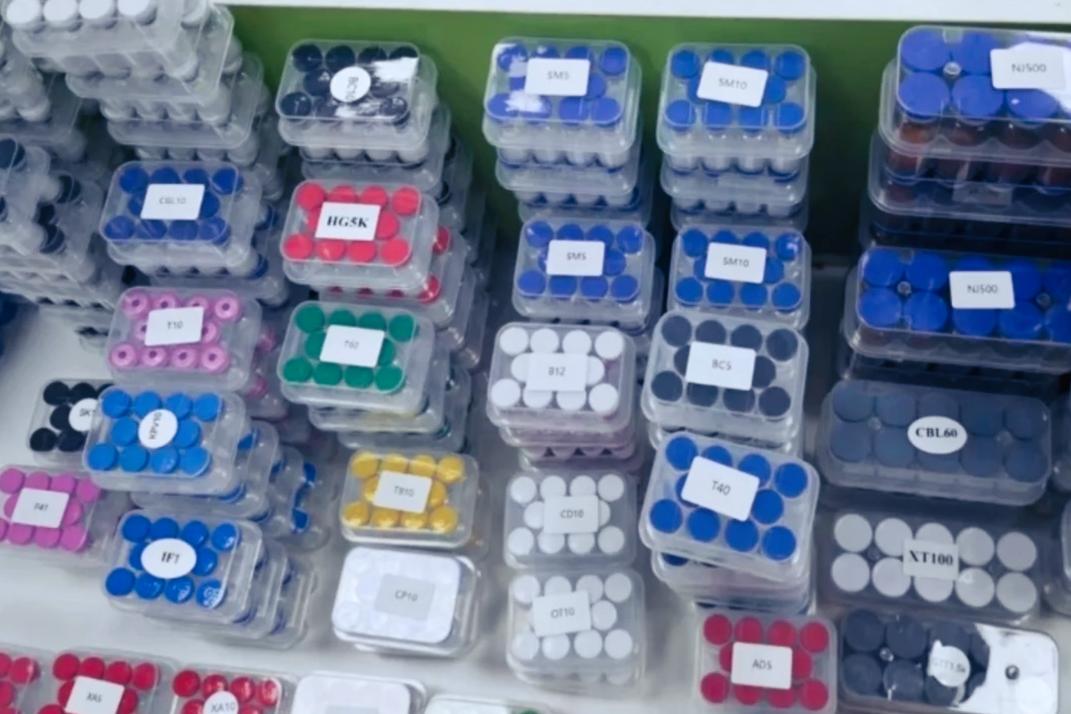
Feature Snippet
Peptide are highly sensitive biomolecules whose stability is influenced by temperature, moisture, oxygen exposure, light, pH, and repeated freeze-thaw cycles. Proper peptide storage typically involves maintaining lyophilized (freeze-dried) peptides at −20°C or below in airtight, low-moisture containers, while reconstituted peptide solutions require refrigerated or frozen conditions depending on the peptide sequence and intended storage duration. Failure to control environmental factors can result in hydrolysis, oxidation, deamidation, aggregation, and loss of biological activity, significantly reducing product quality and shelf life.
Why Peptide Storage Matters: Understanding Molecular Instability
Unlike small-molecule chemicals that can remain stable under ambient conditions for years, peptides are chains of amino acids connected through peptide bonds that are inherently vulnerable to environmental degradation. Their stability depends not only on storage temperature but also on amino acid composition, molecular weight, sequence complexity, and formulation characteristics.
Certain amino acid residues such as methionine, cysteine, tryptophan, histidine, and tyrosine are particularly susceptible to oxidation, while asparagine and glutamine residues may undergo deamidation under unfavorable conditions. Moisture exposure can accelerate hydrolysis, causing peptide bond cleavage and reducing purity. Even trace amounts of water absorbed from ambient air may initiate degradation reactions over time.
The degradation pathway can be simplified as:
Temperature ↑
Humidity ↑
Oxygen Exposure ↑
Light Exposure ↑
        │
        ▼
Chemical Degradation
(Hydrolysis, Oxidation, Deamidation)
        │
        ▼
Purity Loss
        │
        ▼
Reduced Bioactivity
        │
        ▼
Shortened Shelf Life
A useful industrial analogy is pharmaceutical cold-chain logistics. A peptide is comparable to a temperature-sensitive biologic drug. Even if the product appears physically unchanged, invisible molecular degradation can gradually reduce potency long before visible deterioration occurs.
This is why peptide manufacturers focus heavily on packaging, lyophilization technology, and cold-chain storage immediately after production.
Recommended Storage Conditions for Different Peptide Forms
Storage requirements vary significantly depending on whether the peptide is in lyophilized powder form or already dissolved in solution.
| Peptide Form | Short-Term Storage | Long-Term Storage | Typical Stability |
|---|---|---|---|
| Lyophilized Peptide Powder | 2–8°C | −20°C to −80°C | 2–5 years |
| Reconstituted Aqueous Solution | 2–8°C | −20°C | Days to months |
| Sterile Filtered Research Solution | 2–8°C | −80°C | Several months |
| Working Laboratory Aliquots | 2–8°C | Not Recommended | Days to weeks |
For most research-grade and commercial peptides, lyophilized storage at −20°C represents the industry standard because removal of water dramatically slows degradation reactions.
The storage hierarchy can be visualized as:
Lyophilized Powder
        │
Highest Stability
        ▼
Frozen Solution
        │
Moderate Stability
        ▼
Refrigerated Solution
        │
Lower Stability
        ▼
Room Temperature Solution
The closer a peptide remains to its freeze-dried state, the greater its long-term stability.
The Critical Role of Lyophilization
Most commercial peptides are supplied as lyophilized powders because freeze-drying removes more than 95–99% of water while preserving molecular integrity.
The process involves:
Peptide Solution
        │
        ▼
Rapid Freezing
        │
        ▼
Vacuum Sublimation
        │
        ▼
Ice Removal
        │
        ▼
Residual Moisture < 3%
        │
        ▼
Lyophilized Peptide Powder
This process is analogous to preserving food through dehydration. Removing water eliminates one of the primary drivers of chemical and biological degradation. However, unlike food products, peptides require much stricter moisture control because even minor water uptake can restart degradation pathways.
Consequently, peptide suppliers frequently package products under nitrogen atmosphere or vacuum-sealed conditions to minimize oxygen and moisture exposure.
Best Practices for Reconstituted Peptide Solutions
Once a peptide is dissolved, stability generally decreases dramatically. Water acts as a reaction medium that facilitates hydrolysis, oxidation, aggregation, and microbial contamination.
Laboratory and pharmaceutical facilities commonly follow several best practices:
- Reconstitute only the amount needed for immediate use.
- Divide larger volumes into small aliquots before freezing.
- Avoid repeated freeze-thaw cycles.
- Use sterile, low-binding polypropylene tubes.
- Protect light-sensitive peptides with amber containers.
- Maintain proper buffer pH according to peptide specifications.
The most common mistake is repeatedly thawing and refreezing the same vial.
Freeze
   │
Thaw
   │
Freeze
   │
Thaw
   │
Repeated Structural Stress
   │
Aggregation & Degradation
This process resembles bending a metal wire repeatedly. The wire may appear intact initially, but microscopic structural damage accumulates until failure eventually occurs.
For this reason, aliquoting is considered one of the most effective strategies for preserving peptide quality.
Industrial Storage and Quality Control Procedures
Commercial peptide manufacturers and GMP facilities implement significantly more rigorous storage controls than standard laboratory environments.
Typical industrial protocols include:
- Lyophilization under validated conditions
- Nitrogen-flushed packaging
- Moisture barrier foil packaging
- Controlled cold-chain logistics
- Continuous temperature monitoring
- Stability chamber testing
- Accelerated stability studies
- Residual moisture analysis by Karl Fischer titration
- Purity verification using RP-HPLC
- Molecular identity confirmation using LC-MS
Advanced stability programs often evaluate peptide integrity under multiple environmental conditions including 25°C/60% RH, 30°C/65% RH, and 40°C/75% RH to predict long-term shelf life.
The industry reality often overlooked by end users is that peptide degradation rarely begins with visible changes. A peptide may retain its original appearance while losing measurable purity, potency, or biological activity. This is why analytical testing methods such as RP-HPLC, UPLC, LC-MS, and peptide mapping remain essential components of professional peptide storage programs.
Common Storage Mistakes That Reduce Peptide Stability
The majority of peptide stability failures arise from a handful of preventable mistakes:
| Mistake | Consequence |
|---|---|
| Storing dissolved peptides at room temperature | Accelerated degradation |
| Repeated freeze-thaw cycles | Aggregation and purity loss |
| Frequent vial opening | Moisture absorption |
| Improper container sealing | Oxidation and hydrolysis |
| Exposure to direct light | Photodegradation |
| Using contaminated solvents | Microbial growth and instability |
Many degradation events occur gradually and remain undetected until analytical testing reveals reduced purity or altered biological performance.
FAQ
Should peptides be stored in a refrigerator or freezer?
For long-term storage, a freezer at −20°C or below is generally recommended. Refrigeration is suitable only for short-term storage of certain peptide solutions.
Can lyophilized peptides be stored at room temperature?
Short-term exposure is usually acceptable during shipping or handling. Long-term room-temperature storage is not recommended because moisture uptake and degradation rates increase significantly.
Why are freeze-thaw cycles harmful to peptides?
Repeated freezing and thawing can promote aggregation, structural alterations, and chemical degradation. Aliquoting minimizes this risk and preserves peptide integrity.
How long do peptides remain stable?
Properly stored lyophilized peptides often remain stable for 2–5 years or longer. Reconstituted solutions generally have substantially shorter stability periods and should be used according to supplier recommendations and stability data.