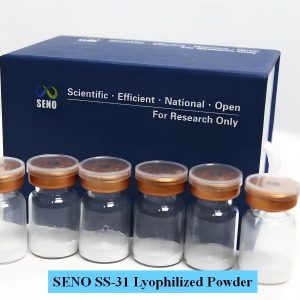


SENO Retatrutide Lyophilized Powder Bulk Wholesale Price
Description
Retatrutide is a next-generation synthetic research peptide investigated for its triple receptor agonist activity involving GLP-1 (glucagon-like peptide-1), GIP (glucose-dependent insulinotropic polypeptide), and glucagon receptors. Its multi-pathway mechanism has made it an important compound in advanced metabolic, obesity, endocrine, and receptor-signaling research models.
SENO supplies high-purity Retatrutide lyophilized powder in multiple research specifications ranging from 5mg to 100mg per vial set. Each batch is manufactured using automated solid-phase peptide synthesis (SPPS), purified by preparative HPLC, and verified using analytical mass spectrometry.
Available specifications:
- RT5 — 5mg × 10 vials
- RT10 — 10mg × 10 vials
- RT15 — 15mg × 10 vials
- RT20 — 20mg × 10 vials
- RT30 — 30mg × 10 vials
- RT40 — 40mg × 10 vials
- RT50 — 50mg × 10 vials
- RT60 — 60mg × 10 vials
- RT100 — 100mg × 10 vials
This peptide is supplied exclusively for laboratory research applications.
What Is Retatrutide?
Retatrutide is a synthetic multi-receptor agonist peptide designed to simultaneously target:
- GLP-1 receptors
- GIP receptors
- glucagon receptors
Its molecular structure was developed to investigate how combined receptor activation influences:
- metabolic regulation
- energy expenditure
- glucose metabolism
- hormonal signaling
- receptor crosstalk mechanisms
Unlike single-pathway peptide compounds, Retatrutide is studied for its ability to activate multiple metabolic signaling systems simultaneously, making it highly relevant in obesity, endocrine, and receptor pharmacology research.
The peptide is typically supplied as a white lyophilized powder to preserve structural stability during storage and transport.
Research Applications
Retatrutide is widely used in advanced laboratory investigations involving:
- GLP-1 receptor pathway studies
- GIP receptor signaling research
- glucagon receptor modulation analysis
- metabolic pathway investigations
- obesity and energy balance models
- endocrine system research
- receptor-binding affinity studies
- peptide pharmacodynamics analysis
- multi-hormonal signaling experiments
- preclinical metabolic research
Its triple agonist profile makes Retatrutide particularly valuable in studies exploring synergistic receptor interactions and integrated metabolic regulation.
Molecular Formula
C221H342N46O68C_{221}H_{342}N_{46}O_{68}C221H342N46O68
Molecular Weight
4837.4 g/mol4837.4\ g/mol4837.4 g/mol
CAS Number
| Parameter | Details |
|---|---|
| Product Name | Retatrutide |
| CAS Number | 2381089-83-2 |
| Molecular Type | Synthetic peptide |
| Form | Lyophilized powder |
| Purity | ≥98% (HPLC verified) |
Product Specifications
| Product Code | Specification | Form |
|---|---|---|
| RT5 | 5mg × 10 vials | Lyophilized powder |
| RT10 | 10mg × 10 vials | Lyophilized powder |
| RT15 | 15mg × 10 vials | Lyophilized powder |
| RT20 | 20mg × 10 vials | Lyophilized powder |
| RT30 | 30mg × 10 vials | Lyophilized powder |
| RT40 | 40mg × 10 vials | Lyophilized powder |
| RT50 | 50mg × 10 vials | Lyophilized powder |
| RT60 | 60mg × 10 vials | Lyophilized powder |
| RT100 | 100mg × 10 vials | Lyophilized powder |
Mechanism of Action
Retatrutide is investigated as a triple receptor agonist capable of interacting with:
- GLP-1 receptors
- GIP receptors
- glucagon receptors
This multi-target mechanism is studied for its effects on metabolic signaling networks and energy homeostasis.
Primary research interests include:
GLP-1 Receptor Activity
Associated with investigations into:
- glucose regulation
- insulin signaling
- appetite-related pathways
GIP Receptor Activity
Studied in relation to:
- incretin biology
- metabolic modulation
- hormonal signaling coordination
Glucagon Receptor Activity
Researched for potential influence on:
- energy expenditure
- lipid metabolism
- hepatic metabolic pathways
The simultaneous activation of these receptor systems makes Retatrutide distinct from traditional single-pathway metabolic peptides.
Solubility
Retatrutide is generally soluble in:
- sterile water
- bacteriostatic water
- phosphate-buffered saline (PBS)
- selected research buffers
Solubility characteristics may vary depending on:
- preparation concentration
- pH conditions
- temperature
- experimental protocol
Researchers commonly prepare aliquots to reduce repeated freeze-thaw exposure after reconstitution.
Storage Recommendations
For optimal peptide stability:
- Store lyophilized powder at -20°C
- Protect from direct light and moisture
- Avoid repeated temperature fluctuations
- Use sterile handling procedures during preparation
After reconstitution:
- Store at 2–8°C for short-term use
- Minimize freeze-thaw cycles
- Use freshly prepared solutions whenever possible
Stability Information
Retatrutide is supplied in lyophilized form to improve long-term structural stability and reduce degradation risk during transport and storage.
Peptide stability may be affected by:
- oxidation
- hydrolysis
- temperature exposure
- pH conditions
- repeated freeze-thaw cycles
- microbial contamination
Lyophilization helps maintain peptide integrity by reducing moisture exposure during storage.
Research Studies & Scientific Interest
Retatrutide has become a major subject of interest in metabolic and endocrine research due to its simultaneous receptor-targeting design.
Current areas of laboratory investigation include:
- integrated hormonal signaling
- metabolic regulation models
- obesity-related pathway research
- glucose homeostasis studies
- receptor pharmacology
- peptide-receptor interaction analysis
- energy expenditure mechanisms
Its multi-receptor mechanism has expanded scientific interest in combination pathway modulation approaches within peptide research.
Manufacturing & Quality Assurance
SENO manufactures Retatrutide using automated solid-phase peptide synthesis (SPPS) platforms under controlled laboratory conditions.
Production workflow includes:
- pharmaceutical-grade amino acid sourcing
- automated peptide chain elongation
- controlled deprotection and coupling cycles
- preparative HPLC purification
- analytical mass spectrometry confirmation
- sterile lyophilization procedures
Each production batch undergoes analytical verification to support:
- purity consistency
- peptide identity confirmation
- structural integrity
- batch reproducibility
This controlled manufacturing process helps ensure reliable performance in sensitive laboratory experiments.
COA (Certificate of Analysis)
Analytical documentation may include:
- batch number
- peptide identity
- HPLC purity analysis
- mass spectrometry verification
- appearance inspection
- storage recommendations
- manufacturing date
COA documentation supports laboratory traceability and internal research quality-control procedures.
HPLC & Mass Spectrometry Verification
Each batch undergoes analytical testing using:
- High-Performance Liquid Chromatography (HPLC)
- Mass Spectrometry (MS)
These analytical methods help verify:
- peptide purity
- molecular identity
- batch consistency
- impurity profile assessment
HPLC chromatograms and MS data may be available for research documentation purposes.
Reconstitution Guide
Recommended Laboratory Procedure
- Allow vial to reach room temperature before opening.
- Prepare sterile water or appropriate research buffer.
- Slowly inject solvent along the vial wall.
- Avoid direct high-pressure impact on the lyophilized powder.
- Gently swirl until fully dissolved.
- Do not shake vigorously.
- Aliquot prepared solution when possible.
- Store prepared solutions under recommended conditions.
Reconstitution concentrations should be optimized according to individual research protocols.
Handling Precautions
- For laboratory research use only
- Not intended for human or veterinary administration
- Use appropriate laboratory PPE
- Handle using sterile technique
- Avoid contamination during preparation
- Dispose of materials according to institutional regulations
Shipping Information
- Worldwide shipping via FedEx or equivalent courier
- Supplied as lyophilized powder for improved transport stability
- Secure protective packaging
- Designed for international laboratory shipping workflows
Frequently Asked Questions (FAQ)
What is Retatrutide used for in research?
Retatrutide is commonly studied in metabolic, endocrine, receptor-signaling, and obesity-related laboratory investigations due to its triple receptor agonist profile.
Why is Retatrutide considered a triple agonist?
The peptide is designed to interact with GLP-1, GIP, and glucagon receptors simultaneously, allowing researchers to investigate integrated metabolic signaling pathways.
How is Retatrutide supplied?
SENO supplies Retatrutide as a white lyophilized powder in multiple vial specifications ranging from RT5 to RT100.
Why is the peptide lyophilized?
Lyophilization helps improve peptide stability during storage and international shipping by reducing moisture-related degradation.
How should Retatrutide be stored?
Lyophilized peptide should generally be stored at -20°C. Reconstituted solutions are typically stored at 2–8°C and used within a short period.
Is this product intended for medical or therapeutic use?
No. Retatrutide supplied by SENO is strictly intended for laboratory research applications only and is not approved for human or veterinary use.