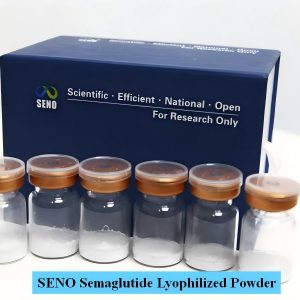


SENO BPC157 + GHK-CU + TB500 + KPV Lyophilized Powder Bulk Wholesale Price
Description
Regenerative & Cellular Signaling Research Peptide Complex
SENO BPC157 + GHK-CU + TB500 + KPV is a high-purity multi-peptide research formulation supplied as a lyophilized powder for advanced laboratory investigations involving tissue regeneration, cellular signaling, receptor-mediated pathways, angiogenesis research, and molecular pharmacology.
This synergistic peptide complex combines:
- BPC157
- GHK-CU
- TB500
- KPV
The formulation is designed for multi-target biochemical and cellular research applications where coordinated peptide interaction and regenerative pathway analysis are required.
Available specification:
- KLOW80 — 80mg × 10 vials
Manufactured under controlled laboratory conditions using automated solid-phase peptide synthesis (SPPS), each batch undergoes analytical verification using HPLC and mass spectrometry to support purity, molecular integrity, and batch reproducibility.
This product is supplied exclusively for laboratory research applications.
What Is BPC157 + GHK-CU + TB500 + KPV?
BPC157 + GHK-CU + TB500 + KPV is a combination peptide formulation developed for laboratory research involving tissue repair signaling, peptide synergy, receptor interaction, and regenerative cellular mechanisms.
BPC157 Component
BPC157 is investigated in laboratory settings for its involvement in:
- tissue-response signaling
- angiogenesis-related pathways
- cellular repair models
- peptide-mediated regenerative mechanisms
GHK-CU Component
GHK-CU is a copper-binding tripeptide researched for:
- cellular signaling pathways
- extracellular matrix investigations
- regenerative biology studies
- peptide-copper interaction analysis
TB500 Component
TB500 is studied for its role in:
- cellular migration pathways
- cytoskeletal signaling
- tissue remodeling investigations
- regenerative response models
KPV Component
KPV is a short peptide fragment investigated for:
- receptor-mediated signaling
- cellular pathway modulation
- peptide interaction studies
- inflammatory signaling research models
Together, the multi-peptide system enables broad experimental investigation into coordinated cellular signaling and regenerative pathway interactions.
The formulation is supplied as a white to off-white lyophilized powder to support long-term stability during storage and transportation.
Research Applications
BPC157 + GHK-CU + TB500 + KPV is commonly utilized in laboratory investigations involving:
- tissue regeneration research
- wound-healing pathway analysis
- angiogenesis studies
- receptor-mediated signaling investigations
- cellular repair models
- regenerative biology research
- molecular pharmacology studies
- peptide synergy experiments
- intracellular signaling analysis
- extracellular matrix research
- preclinical regenerative models
- biochemical pathway investigations
The multi-component formulation supports simultaneous investigation of multiple cellular signaling systems in advanced laboratory workflows.
Molecular Formula
BPC157
C62H98N16O22C_{62}H_{98}N_{16}O_{22}
GHK-CU
C14H24CuN6O4C_{14}H_{24}CuN_6O_4
TB500 (active fragment related structure)
C212H350N56O78SC_{212}H_{350}N_{56}O_{78}S
KPV
C16H28N4O5C_{16}H_{28}N_4O_5
Molecular Weight
Approximate combined molecular profile:
∼7 kDa\sim7\ kDa
CAS Number
| Component | CAS Number |
|---|---|
| BPC157 | 137525-51-0 |
| GHK-CU | 89030-95-5 |
| TB500 / Thymosin Beta Fragment | Research reference compound |
| KPV | 67727-97-3 |
Product Specifications
| Product Code | Specification | Form | Purity | Appearance |
|---|---|---|---|---|
| KLOW80 | 80mg × 10 vials | Lyophilized powder | ≥98% | White to off-white |
Mechanism of Action
The peptide blend is investigated for coordinated activity across multiple regenerative and receptor-mediated signaling pathways.
Tissue Repair & Cellular Response
Research commonly focuses on:
- cellular migration signaling
- tissue remodeling pathways
- regenerative cellular communication
- extracellular matrix interactions
Angiogenesis & Regenerative Biology
Investigations may involve:
- vascular signaling pathways
- angiogenesis-related cellular models
- growth-factor interaction studies
- peptide-mediated repair signaling
Receptor-Mediated Signaling
The peptide complex is also utilized in studies involving:
- intracellular communication pathways
- receptor-binding analysis
- peptide synergy investigations
- cytokine and signaling modulation models
The multi-peptide structure allows researchers to evaluate complex pathway interactions within regenerative biology systems.
Solubility
The peptide formulation is generally soluble in:
- sterile water
- bacteriostatic water
- phosphate-buffered saline (PBS)
- selected laboratory research buffers
Suggested preparation guideline:
∼1 mL solvent per 10mg peptide\sim1\ mL\ solvent\ per\ 10mg\ peptide
Preparation conditions should be optimized according to individual laboratory protocols and assay requirements.
Storage Recommendations
For optimal peptide stability:
- Store lyophilized peptide at -20°C
- Protect from light and moisture
- Avoid repeated temperature fluctuations
- Maintain sterile laboratory handling conditions
After reconstitution:
- Aliquot into sterile containers when possible
- Minimize freeze-thaw cycles
- Store according to experimental requirements
- Use prepared solutions promptly
Stability Information
The lyophilized format helps preserve structural integrity and reduce moisture-related degradation during storage and transportation.
Factors influencing peptide stability may include:
- oxidation
- hydrolysis
- microbial contamination
- repeated freeze-thaw cycles
- prolonged storage after reconstitution
- temperature exposure
Controlled storage conditions support reproducible laboratory performance and peptide consistency.
Research Studies & Scientific Interest
This multi-peptide formulation is increasingly investigated in regenerative biology and cellular signaling research due to its synergistic pathway profile.
Research areas commonly include:
- regenerative cellular mechanisms
- peptide synergy analysis
- wound-healing pathway models
- receptor pharmacology
- extracellular matrix signaling
- angiogenesis-related research
- intracellular communication studies
- molecular pharmacology investigations
Its broad multi-target signaling profile makes it useful for advanced exploratory laboratory studies involving coordinated cellular responses.
Manufacturing & Quality Assurance
SENO manufactures BPC157 + GHK-CU + TB500 + KPV using automated solid-phase peptide synthesis (SPPS) under controlled laboratory environments.
Production workflow includes:
- high-purity raw material sourcing
- automated peptide sequence assembly
- controlled synthesis protocols
- preparative HPLC purification
- mass spectrometry verification
- sterile lyophilization procedures
Each batch undergoes analytical verification to support:
- molecular integrity
- purity consistency
- structural stability
- batch reproducibility
- sequence fidelity
This manufacturing process supports reliable performance in sensitive regenerative and cellular research workflows.
COA (Certificate of Analysis)
Analytical documentation may include:
- batch number
- HPLC purity profile
- molecular verification
- appearance inspection
- manufacturing date
- storage recommendations
- quality-control approval
COA documentation supports laboratory traceability and internal quality assurance procedures.
HPLC & Mass Spectrometry Verification
Each batch undergoes analytical assessment using:
- High-Performance Liquid Chromatography (HPLC)
- Mass Spectrometry (MS)
These methods help verify:
- peptide purity
- molecular identity
- structural consistency
- impurity assessment
- batch reproducibility
Analytical chromatograms and verification data may be available for laboratory documentation purposes.
Reconstitution Guide
Recommended Laboratory Procedure
- Allow vial to reach room temperature before opening.
- Select sterile solvent appropriate for the experimental protocol.
- Slowly add solvent along the vial wall.
- Gently swirl until fully dissolved.
- Avoid vigorous shaking or foaming.
- Aliquot prepared solution into sterile containers when possible.
- Store according to laboratory requirements.
Researchers should optimize preparation concentrations according to specific experimental designs.
Handling Precautions
- For laboratory research use only
- Not intended for human or veterinary administration
- Use laboratory PPE during handling
- Maintain aseptic preparation procedures
- Avoid repeated freeze-thaw cycles
- Dispose of materials according to institutional biosafety regulations
Shipping Information
- Worldwide FedEx or equivalent courier shipping
- Lyophilized peptide supplied for improved transport stability
- Ambient temperature shipping with protective packaging
- Packaging designed to maintain vial integrity during international transportation
Frequently Asked Questions (FAQ)
What is BPC157 + GHK-CU + TB500 + KPV used for in research?
This peptide blend is commonly studied in regenerative biology, tissue repair signaling, receptor-mediated pathway analysis, and cellular communication research.
Why combine multiple peptides in one formulation?
The combination allows researchers to investigate synergistic interactions between different regenerative and signaling pathways within the same experimental model.
Why is the peptide supplied in lyophilized form?
Lyophilization helps improve structural stability and reduces moisture-related degradation during long-term storage and transportation.
What analytical methods are used for quality verification?
Each batch is verified using HPLC and mass spectrometry to confirm purity, molecular identity, and structural consistency.
How should the peptide formulation be stored?
Lyophilized peptide should generally be stored at -20°C. Reconstituted solutions should be handled carefully and protected from repeated freeze-thaw exposure.
Is this product intended for therapeutic or medical use?
No. SENO BPC157 + GHK-CU + TB500 + KPV is supplied strictly for laboratory research applications only and is not approved for human or veterinary administration.