
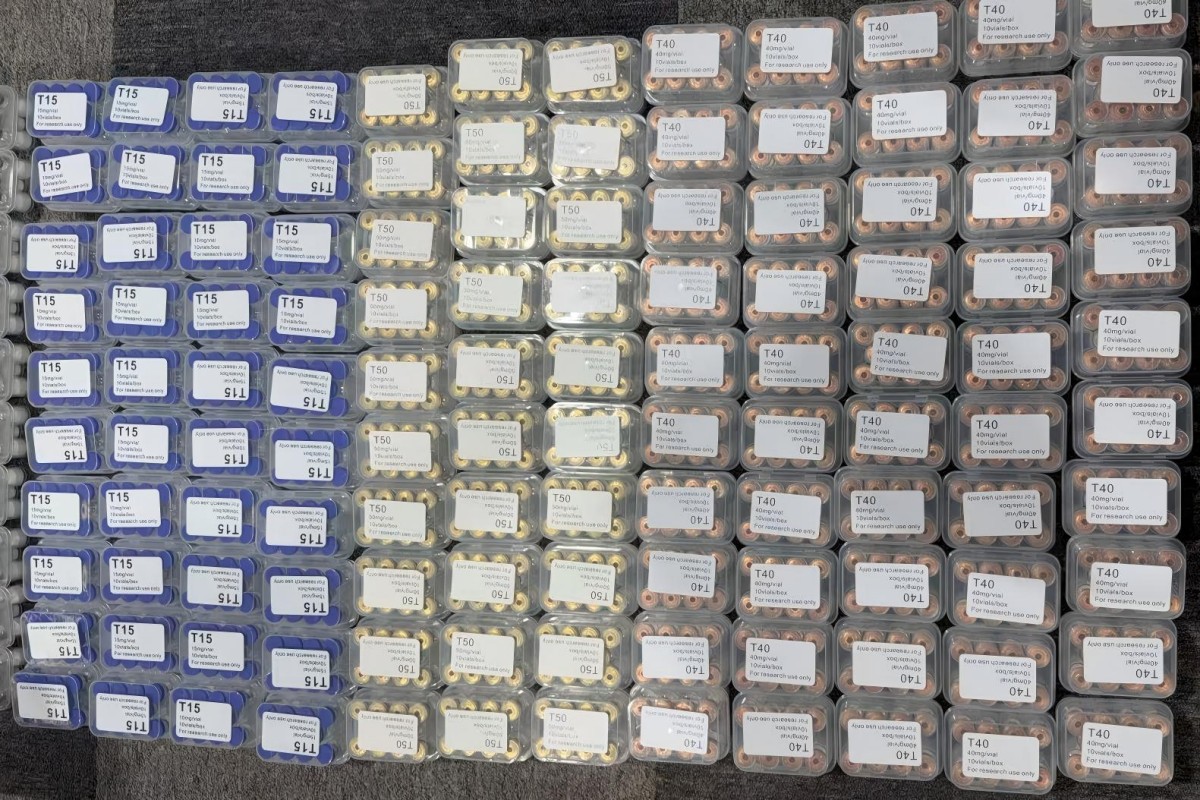
To mix péptidos with bacteriostatic water, you gently reconstitute a lyophilized peptide by slowly adding Agua bacteriostática along the inner wall of the vial, avoiding direct force on the powder, then allow it to dissolve naturally without shaking. This preserves peptide structure and minimizes degradation risk.
LO ÚLTIMO LISTA DE PRODUCTOS Y PRECIOS
How to Mix Peptides with Bacteriostatic Water
A laboratory-style explanation
From a lab perspective, this process is not just “mixing”—it is controlled rehydration of a delicate molecular structure.
Lyophilized peptides are dry, stabilized forms. Once water is added, molecular motion increases immediately, so the goal is to minimize mechanical stress and contamination.
1. What You Are Actually Working With
Before mixing, it helps to understand the system:
- Peptide (freeze-dried powder) = stabilized molecular structure
- Bacteriostatic water = sterile solvent with antimicrobial agent
- Reconstitution process = restoring molecular mobility
Analogía simple
- Peptide powder = compressed dry sponge
- Adding water = reactivating the sponge
- Goal = wet it evenly, not damage it
2. Step-by-Step Process (Lab Method)
Step 1: Sterile Preparation
- Clean vial tops with alcohol swab
- Use sterile syringe
- Avoid touching rubber stoppers unnecessarily
👉 Think of this as preparing a “clean room interaction”
Step 2: Draw Bacteriostatic Water
- Pull desired volume slowly into syringe
- Remove air bubbles if present
Step 3: Controlled Injection (Critical Step)
- Insert needle into peptide vial
- Aim toward the inner glass wall
- Inject slowly so liquid flows gently down the side
👉 Avoid direct impact onto powder
Why this matters
Direct injection force can:
- disturb peptide microstructure
- increase aggregation risk
- reduce solubility quality
Analogía
Like pouring water along the side of a glass:
- smooth flow = stable dissolution
- direct splash = turbulence and clumping
3. Dissolution Phase
After adding liquid:
- do not shake
- allow vial to sit
- gently swirl if needed
What is happening scientifically?
- peptides transition from solid state → solvated state
- molecules begin unfolding into solution
- hydrogen bonding with water stabilizes structure
Analogía
- like sugar dissolving in tea
- stirring gently works
- shaking violently creates foam and instability
4. Concentration Control (Important Concept)
Final concentration depends on:
- amount of peptide (mg)
- volume of bacteriostatic water (mL)
Simple Formula
Concentration=Peptide amount (mg)Volume of BAC water (mL)\text{Concentration} = \frac{\text{Peptide amount (mg)}}{\text{Volume of BAC water (mL)}}
5. Sealed vs Open System Stability
Sealed vial (before mixing)
- minimal contamination risk
- high stability
After reconstitution
- increased molecular activity
- higher degradation sensitivity
- requires cold storage conditions in most lab protocols
Analogía
- dry powder = stored blueprint
- solution = active working system
Once active:
👉 it must be handled more carefully
6. Common Mistakes (Lab Observations)
- injecting directly onto powder
- shaking aggressively
- introducing air bubbles
- repeated needle puncture
- poor sterile technique
Why these matter
They increase:
- peptide aggregation
- oxidation risk
- structural instability
7. Key Scientific Principle
From a molecular perspective:
- peptides are stabilized in dry form
- hydration increases molecular motion
- mechanical force can disrupt folding interactions
Analogía
- dry peptide = folded paper
- incorrect mixing = crumpling the structure
- gentle rehydration = unfolding without damage
Resumen
Mixing peptides with bacteriostatic water is fundamentally about:
controlled rehydration, not mechanical mixing
The key principles are:
- add liquid slowly
- avoid direct force
- maintain sterility
- allow natural dissolution
Peptide reconstitution is a controlled hydration process where preserving molecular structure is more important than speed or agitation.