
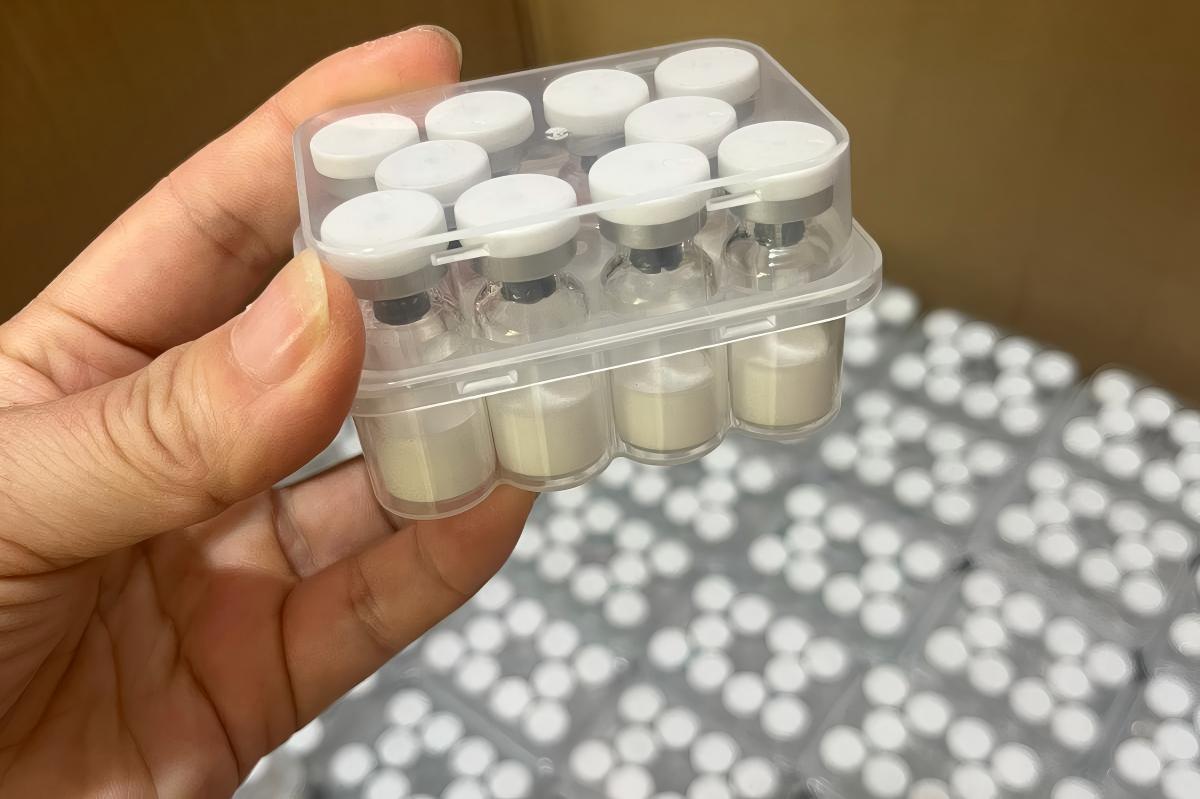
KPV peptide is a short-chain tripeptide composed of three amino acids: Lysine (K), Proline (P), and Valine (V).
Quick Answer
KPV peptide is a very small peptide made of three amino acids that comes from a larger molecule called α-MSH. You can think of it as a tiny working part taken out of a bigger machine that can still function on its own.
In laboratory research, KPV acts like a signal regulator inside cells:
- Like a dimmer switch: it adjusts how strong certain signals are, instead of creating them
- Like a traffic controller: it helps manage the flow of cellular signals so they don’t become overloaded
It mainly works by influencing key communication pathways in cells, such as NF-κB, which can be understood as a main signaling highway inside the cell.
1. Basic Structure and Properties
From a molecular standpoint, KPV is:
- Sequence: Lys–Pro–Val
- Type: Tripeptide (3 amino acids)
- Molecular weight: ~369 Da
- Solubility: Highly water-soluble
- Stability: Relatively stable compared to longer peptides
Because of its small size, it is often easier to synthesize, purify, and handle in laboratory settings.
2. Where KPV Comes From
KPV is not a random sequence—it is derived from a larger biological molecule:
- Parent molecule: α-MSH (alpha-melanocyte-stimulating hormone)
- KPV corresponds to the C-terminal fragment of this hormone
This origin is important because it explains why KPV retains certain biological signaling properties, even as a very short peptide.
3. Mechanism of Action (Lab Perspective)
In experimental systems, KPV is primarily associated with signal modulation rather than direct structural activity.
Key pathways studied:
- NF-κB signaling pathway
- Cytokine expression regulation
- Cellular inflammatory response signaling
Instead of acting like a structural protein, KPV behaves more like a regulatory signal molecule.
Simple Analogies (to understand mechanism)
- Like a dimmer switch:
It doesn’t turn signals on or off—it adjusts their intensity. - Like a traffic controller:
It helps regulate how signals move through cellular pathways, preventing overload.
4. Production Method
In laboratory and industrial settings, KPV is typically produced using:
👉 Solid-Phase Peptide Synthesis
Why SPPS works well for KPV:
- Short sequence → high synthesis efficiency
- High purity achievable (≥95–99%)
- Scalable production
5. Stability Characteristics
Compared to longer peptides, KPV is:
More stable because:
- Fewer peptide bonds → fewer hydrolysis sites
- No complex folding required
Still sensitive to:
- Moisture (in solution)
- Oxidation (environmental exposure)
- Temperature (accelerates degradation)
6. Common Research Context
In lab environments, KPV is often categorized as:
- A signal-modulating peptide fragment
- A minimal active sequence derived from a hormone
- A model peptide for studying short-chain bioactivity
7. How It Differs from Larger Peptides
| Feature | KPV | Larger peptides (e.g., BPC-157) |
|---|---|---|
| Length | Very short (3 aa) | Medium (10–20 aa) |
| Stability | Higher | Lower |
| Function | Signal modulation | Multi-pathway interaction |
| Structure | Simple | More complex |
The End
KPV peptide is best understood as:
A minimal, biologically derived tripeptide that functions primarily as a signaling modulator in cellular systems.
It stands out because of its simplicity, stability, and retained biological activity despite its very small size.